
written by Jacqueline Mayer
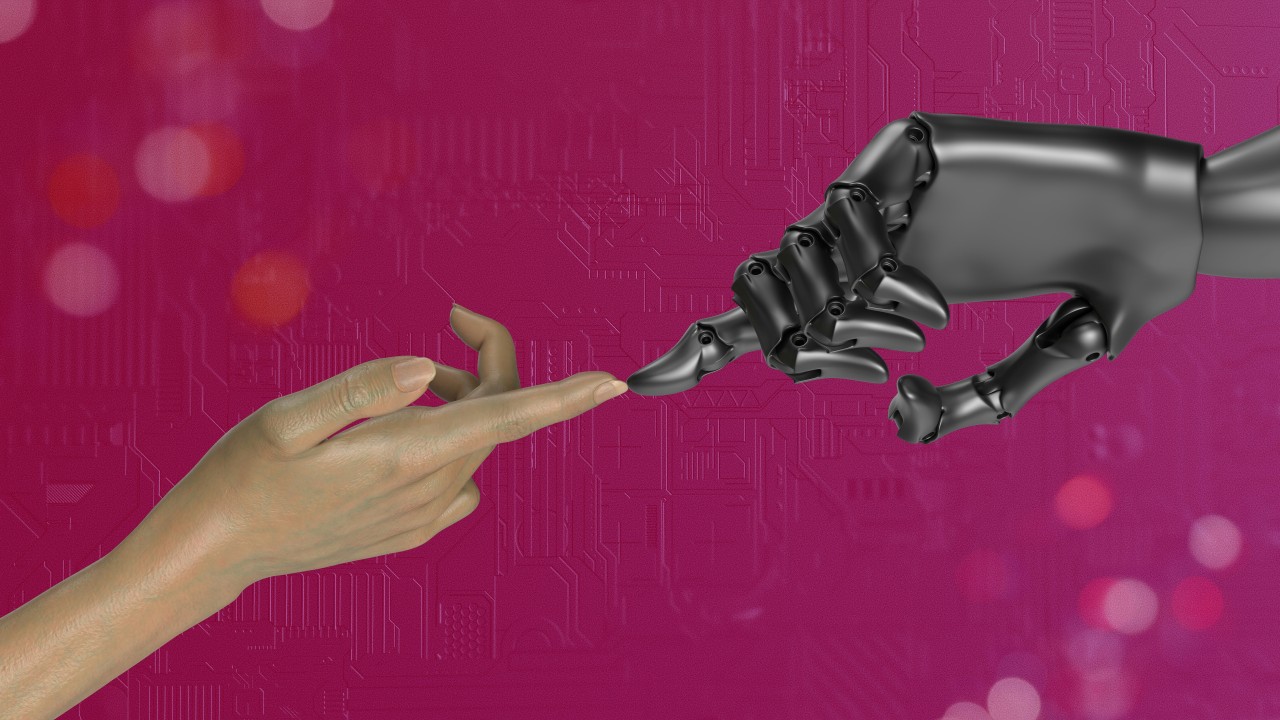
For the last couple of years, the rise of AI hasn’t been a question of if, but what. We knew a big shift was coming, but nobody could predict what it would look like, or what it would eventually become (nor do we really know now). For an industry like ours, communications, public relations and marketing, which already operates in a state of constant flux, it felt like another layer of profound uncertainty. How would this new technology reshape a landscape already struggling with a shrinking media landscape, content overload, and a crisis of true credibility?
A recent report, the ‘SA PR Measurement Landscape Report 2025’, shed some light on how the market in South Africa is currently experiencing AI. It doesn’t offer a clear, definitive direction, but it is interesting to see how people in my industry are thinking about it. To be honest, I’ve probably been a bit annoying myself lately. In almost every conversation with a peer, I try to gauge how they feel about AI and its impact. The report, combined with these informal chats, confirms that this isn’t just a storm; it’s a shift in the climate. And it’s prompting an evolution in how we work.
The numbers themselves are quite staggering. The 2025 report reveals that AI adoption in the South African PR industry has skyrocketed, with a remarkable 45% of practitioners having started using AI in 2024 alone. For many, the biggest draw is the promise of efficiency, and it’s not hard to see why. A whopping 92% of AI users report significant time savings, using it for everything from brainstorming ideas to media research.
This is something we’re seeing first-hand. Another way that AI is helping us is from an admin and team management perspective. Our industry has always been incredibly heavy in admin that takes time away from creative work and critical thinking. Better AI tools are beginning to truly streamline these processes, improving our workflows, and automating the mindless tasks that used to eat up our days. This gives us more time for the really important stuff: delivering value to our clients.
But the promise of AI comes with a reality check. The potential for machine-generated content, while efficient, often feels sterile. It lacks the spark, the very human messiness that makes a story truly work. Content written by humans for humans is stilll king.
I have however, found an unexpected side effect to this shift. Personally, I find that the rise of AI has made me and our team more creative and has stimulated our critical thinking more than ever before. It has forced us to ask new questions and to re-look at how we do things. When you have a tool that can generate a dozen ideas in a minute, the real skill isn’t in the generation, but in the discernment and the execution. It’s in asking: Is this authentic? Is this insightful? Does this truly serve our client’s purpose, or is it just adding to the noise?
One of the biggest lessons I have learnt on this journey is that one has to be patient with the AI. It will make mistakes as it learns. I’ve started to think of it as an intern that has great potential but needs to be taught how to best support the business. You don’t get frustrated with an intern for not knowing everything on day one; you guide them (and you will also not let the intern take over your business). We need to adopt the same mindset here. We must stay curious about how this can help us drive the industry forward, rather than getting frustrated by its current limitations or fear its unsupervised impact.
This shift naturally begs the question: how do we as an industry need to update and change our skills to fit into this future? It seems clear that our value is shifting higher up the chain. If AI can help with the initial research or the first pass at an idea, our role becomes less about pure execution and more about strategy, less about production and more about analysis. Our focus must be on honing our strategic counsel, our ethical judgment, and our ability to build authentic narratives that resonate.
This brings me to what I believe is our most valuable asset in this new era: our humanity. And frankly, we need it now more than ever. AI can’t build a relationship with a journalist at a shrinking publication, but a human can. AI can’t cut through the content overload with a story that has genuine heart and empathy, but a human can. And in an era of so much misinformation and ‘fake news’, AI can’t be the arbiter of trust and credibility, but we, as ethical practitioners, can.
Interestingly, this shift is also elevating the importance of our work in a very tangible way. As AI-driven search engines like ChatGPT and Perplexity become more prevalent, the rules of online visibility are being rewritten. These tools don’t serve up ads; they provide answers based on credible, authoritative sources. This means that the game is no longer just about keywords and paid campaigns. It’s about earning trust and building authority (an exciting opportunity for all of us). In this new landscape, PR is becoming the new SEO. Our ability to secure earned media in trusted publications is more valuable than ever, creating a lasting impact that paid ads can’t replicate.
As a team, we are actively looking at creative ways to integrate AI into our work and daily lives. Our goal is simple: to use these tools to deliver better, more creative, and more thoughtful solutions for our customers. It’s about using technology to become more human, not less.